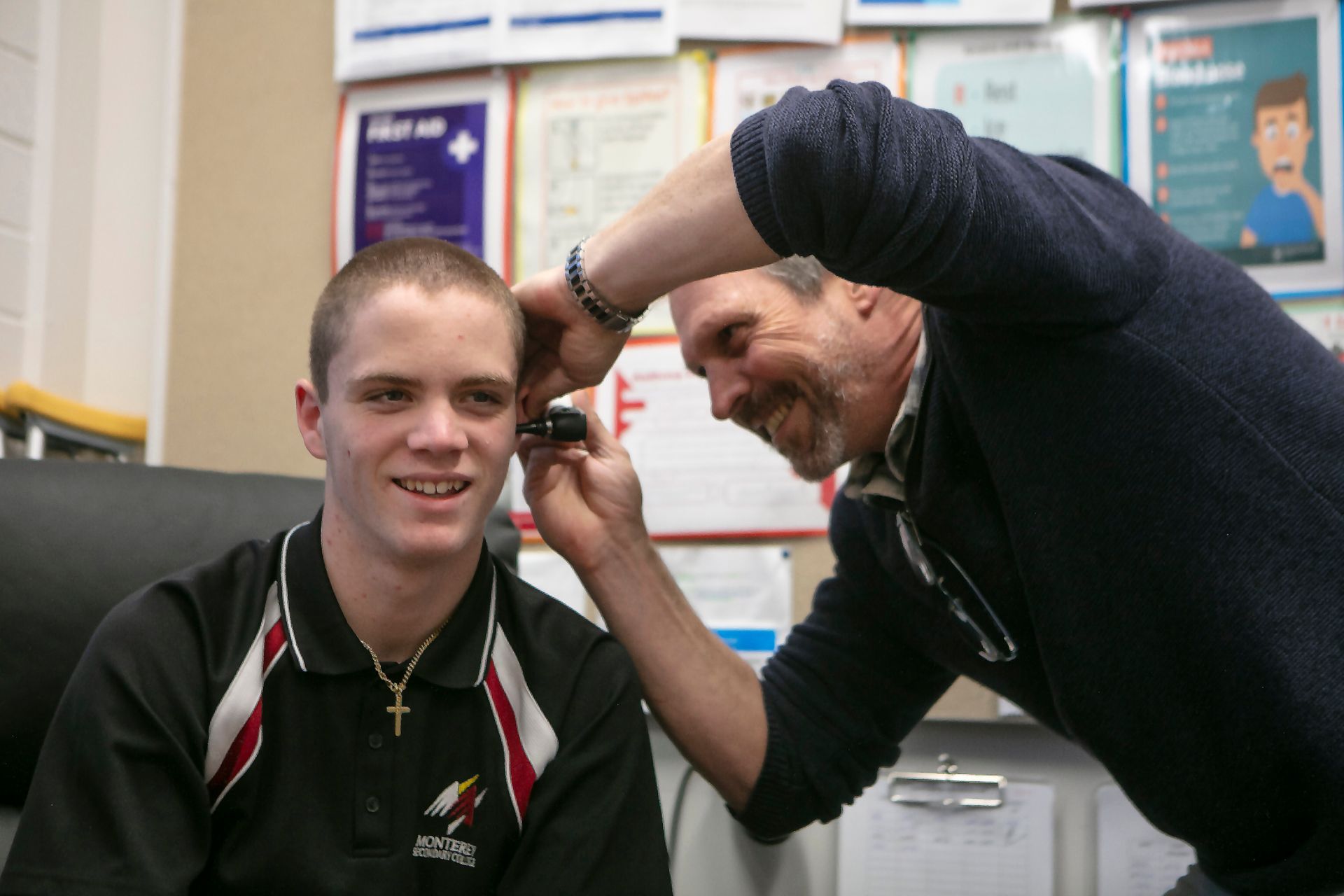
Some students bring a friend for support, others prefer to come alone. Some have been encouraged by teachers to visit the doctor or nurse, while others are regular visitors.
Whatever the reason, the
Doctors in Secondary Schools (DiSS) program, which began in Victoria in 2017, provides a safe and reassuring place for students, some of whom might rarely see health professionals.
SEMPHN has 19 Victorian government secondary schools participating in the program. Each school has its own clinic, providing dedicated consultation facilities where general practitioners and practice nurses such as Brad and Fiona deliver on-site care to young people in need.
In 2024–25, DiSS doctors held 3,146 consultations with students in the SEMPHN region, while nurses held 2,616 consultations. Physical health concerns accounted for 48% of visits, mental health issues for 42%, and 6% of consultations related to sexual health. Other reasons, including alcohol and other drugs, assessment, emergency, and family intervention made up the remaining 4%.
The Victorian Government selected participating schools through an expression of interest process based on schools with a high Student Family Occupation and Education index which provides an accurate measure of disadvantage.
The doctors and nurses, who are specialists in adolescent health, are an essential and trusted part of schools’ communities by providing timely, compassionate healthcare that meets students where they are, both physically and emotionally.
As a bulk-billed program, there are no out-of-pocket expenses for students or their parents and guardians, enabling early intervention and prevention. The program integrates with existing student wellbeing initiatives, promoting health literacy and preventive healthcare practices.
SEMPHN Provider Support Officer Funmi Omidiora leads the DiSS program, with support from colleague Allison Ferreira. They manage contracts, commissioning and insurance, match health professionals with schools, ensure accreditation and adolescent health training, monitor the program, regularly visit the schools, and solve problems.
Funmi says the program, which runs only in Victoria but has received a lot of interest from other states, consistently received positive feedback from schools, doctors and nurses, and students.
“The health professionals involved in the program are passionate and enthusiastic about supporting adolescents,” Funmi says. “It’s a very rewarding program to be involved in – everybody considers it very beneficial. If it wasn’t for DiSS, many of these students would simply not see doctors or nurses, which sometimes could lead to emergency presentations at hospitals.”
Monterey Secondary College Education Support Officer Peter Kinnaird says many of the students at their small school face complex challenges that stem from disadvantage, trauma, and neurodiversity.
Barriers such as school avoidance, disengagement, and limited access to healthcare frequently impact their ability to attend and engage in learning consistently.
Peter points to a recent example of the impact of the DISS program on one student.
“We had a situation where a student had run out of his medication, leading to significant dysregulation (inability to control emotions),” Peter says. “This led to difficulties in the classroom and an external suspension. Our DiSS team responded with empathy and speed.