Our community and health needs
Understanding our region and the health needs of our community
Evidence-based practice is the foundation of our work, and we are constantly asking, ‘Together, how can we do even better?’
As a primary health network, we have national priorities set by the Australian Government. These are mental health, First Nations health, alcohol and other drugs, aged care, population health, health workforce and digital health.
We also have local priorities informed by our annual Health Needs Assessment and ongoing conversations with our partners, community members, Clinical and Community Council, and reference groups. Our priority populations include children, young people, older adults, First Nations people, LGBTIQA+ communities, and culturally and linguistically diverse communities.
A core function of SEMPHN is the commissioning of services in response to these changing priorities and needs. To work out what’s needed and where, we continually gather evidence and insights to guide our work.
Data-driven decision-making is key to developing programs and services through commissioning. Shifts in data help us to determine primary health needs and opportunities and ensure health services are commissioned in the highest areas of need and for the greatest value and sustainability.
Our community at a glance
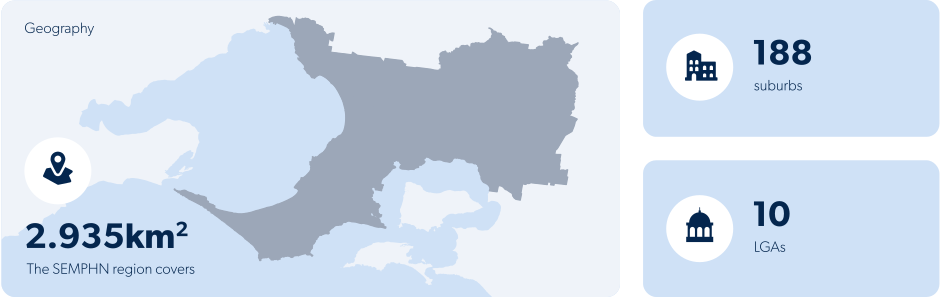
Our region
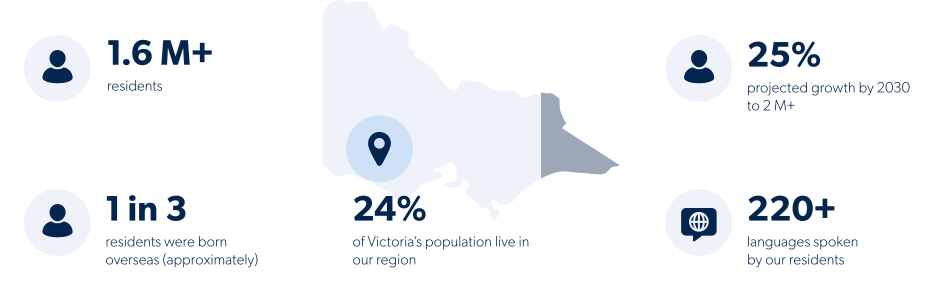
Our population
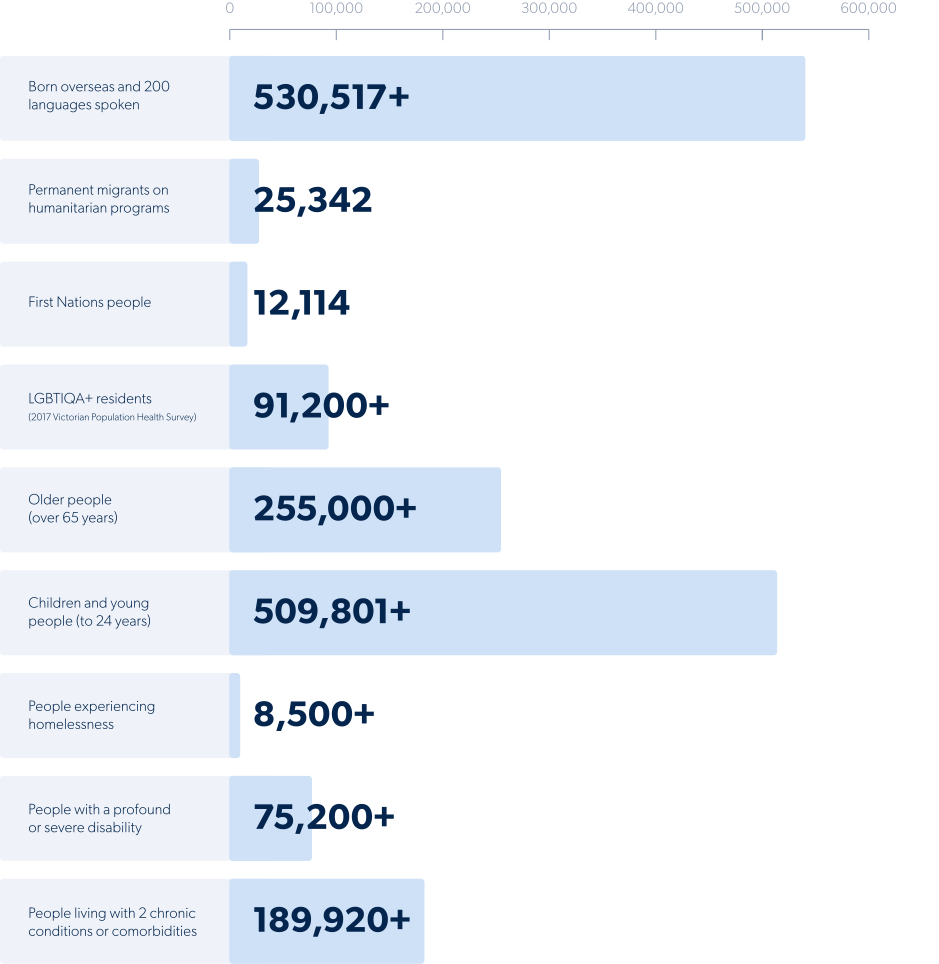
Priority populations
Our health services





Our health needs
The 2024 Health Needs Assessment brings together data, evidence, and research from more than 100 data sources to reveal the changing health landscape of south east Melbourne. Together with the outlook to 2028, it forms an evidence-based guide to our planning, commissioning, and partnerships for improved care and outcomes across the region.
Nearly a quarter of Victoria’s population (1.6 million people) reside in south east Melbourne. By 2030, more than 2 million residents will call south east Melbourne home. Growth is centred in the ‘South East Growth Corridor’, which covers the local government areas (LGAs) of Casey, Cardinia, and Greater Dandenong. The corridor is an area experiencing rapid development, socioeconomic disadvantage, and high rates of chronic disease. In fact, Casey residents account for 1 in 4 hospital admissions and emergency department (ED) presentations across the region.
Key health insights
Chronic conditions are leading cause of illness, disability, and death. In the 2023–24 financial year alone, more than 205,000 people were newly diagnosed with a chronic disease in our region, most commonly:
- mental health conditions: 27.5% (89,000 people)
- musculoskeletal conditions: 20.2% (65,500 people)
- cardiovascular conditions: 20.2% (65,400 people).
These trends are particularly pronounced in communities with older residents (aged 65 years and older), typically from Rosebud to McCrae, where hospital admission rates are around twice the regional average.
Our priority populations
First Nations communities continue to experience significant health disparities, including higher rates of disability, mental illness and premature death. Indicators such as smoking during pregnancy (37.5%) and low birth weight (10.5%) remain above the Victorian state averages. However, there have been notable improvements. Smoking prevalence has decreased from 53.1% in 2002 to 41% in 2019. Childhood immunisation rates are strong, with 96% of First Nations children fully vaccinated by age 5. The highest demand for mental health support is observed in Port Phillip, Frankston, and Greater Dandenong, where 1 in 4 First Nations individuals report living with a mental health condition.
The LGAs of Greater Dandenong, Casey, and Frankston experience the greatest levels of socioeconomic disadvantage in south east Melbourne, although there is significant socioeconomic variation across the region, with Bayside, Stonnington and Glen Eira being highly advantaged areas. More than 8,543 people in south east Melbourne are at risk of or already experiencing homelessness, with Casey and Frankston having the highest homelessness rates. Disadvantaged people in these areas are more likely to need additional care.
Culturally and linguistically diverse communities make up one-third of our region, with the largest proportion of overseas-born residents in Greater Dandenong and Casey. This means more patients are presenting to EDs from non-English speaking backgrounds (a 17% increase from the 2020 financial year to the 2023 financial year). Approximately 16.3% of culturally and linguistically diverse patients attending general practice have a mental health diagnosis, matching statewide averages. Collectively, this signals the need for linguistically- and culturally-inclusive care.
Older adults (those aged 65 years and older) comprise 16.2% of the south east Melbourne population, with the Mornington Peninsula and Bayside having the highest proportions. Many in these areas live with multiple chronic diseases, often cardiovascular, musculoskeletal, and mental health conditions. Falls are one of the leading causes of death for this population. One older Australian goes to hospital with an injury every 3.5 minutes. This number is likely to increase as our population ages.
Meeting the challenge
Demand on general practice, aged care, and mental health services is rising faster than capacity, with workforce shortages exacerbating service gaps. These challenges highlight the importance of strategic commissioning, data-driven planning, and community co-design to close service gaps and improve coordination of care.
Through these approaches, SEMPHN is building stronger partnerships and creating opportunities for people in south east Melbourne to live their healthiest lives.
Explore the data and work with us
Download the 2024 Health Needs Assessment to explore detailed insights by region, population, and condition.
If you’re a provider, researcher, or community organisation who shares our commitment to understanding and addressing the health needs of south east Melbourne, we invite you to work with us.
Together, we can shape a healthier future.